> For the complete documentation index, see [llms.txt](https://guide.signspace.com/llms.txt). Markdown versions of documentation pages are available by appending `.md` to page URLs; this page is available as [Markdown](https://guide.signspace.com/en/managing-meta-data/add-metadata-templates.md).
# Add metadata templates
Metadata templates are used to collect data from users in a structured way. For example, you can create one metadata template for meeting minutes and another for a specific type of contract, such as subcontracting or just a common contract template.
Once you have defined the required metadata fields, you are ready to create a metadata template that defines what information is collected from users.
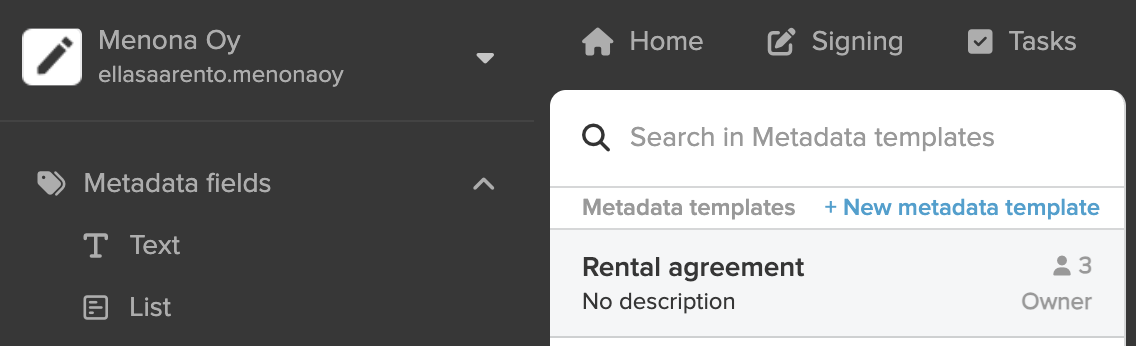
New template is created by clicking **+New metadata template** in the metadata templates list.
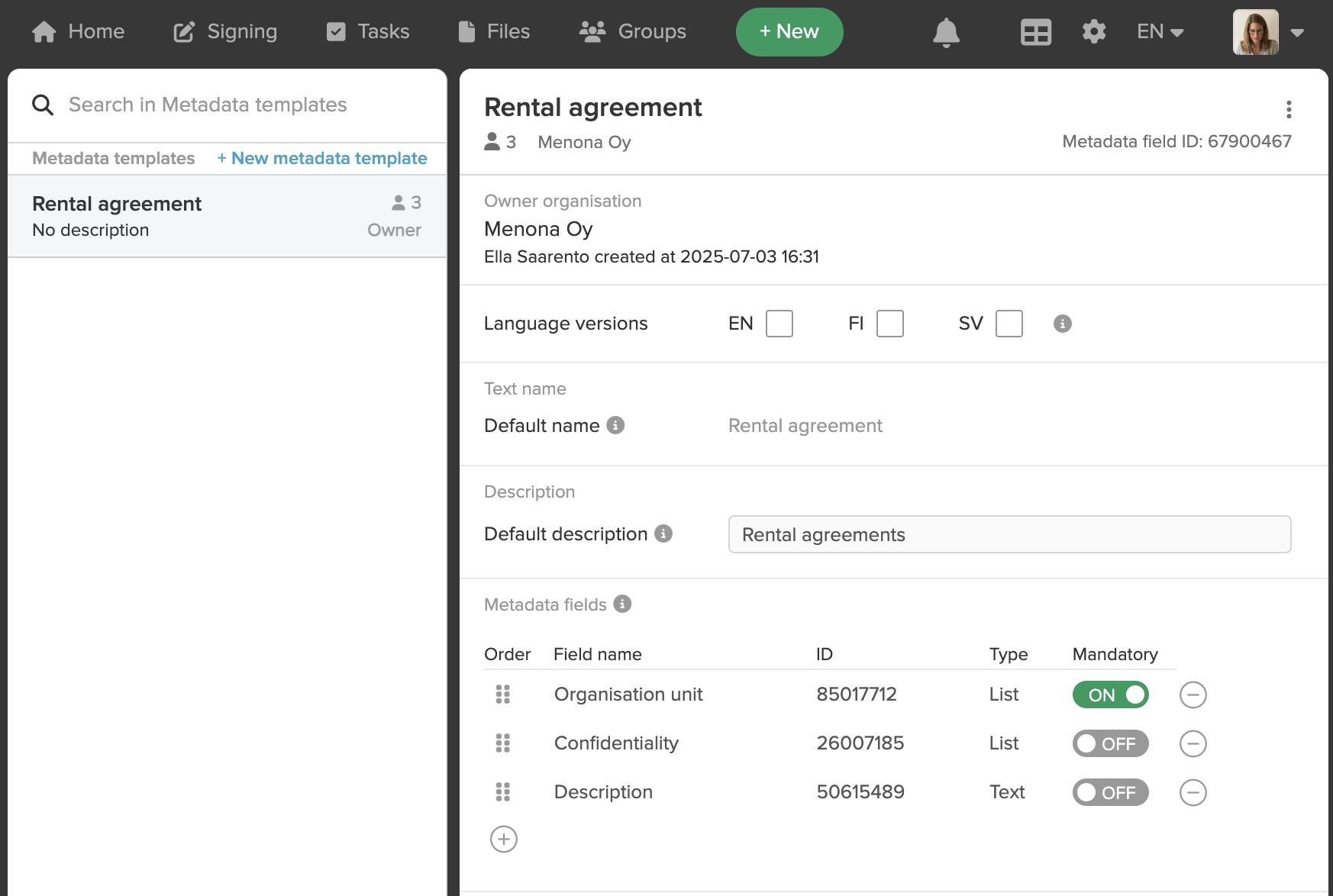
Give a name and fill a description if needed. These are visible to users in the pages where metadata is entered.
Add metadata fields from the list of available metadata fields. Selected fields can be arranged by dragging and dropping to specify the display order.
You can make some or all of the metadata fields mandatory. This is recommended if the metadata is later used to share or archive documents.
Metadata template is shared with your organization by default. Sharing can be customized with certain restrictions. At the organizational level, distribution is limited to own organization and group companies.